
Our projects and concepts
Carbon Capture City
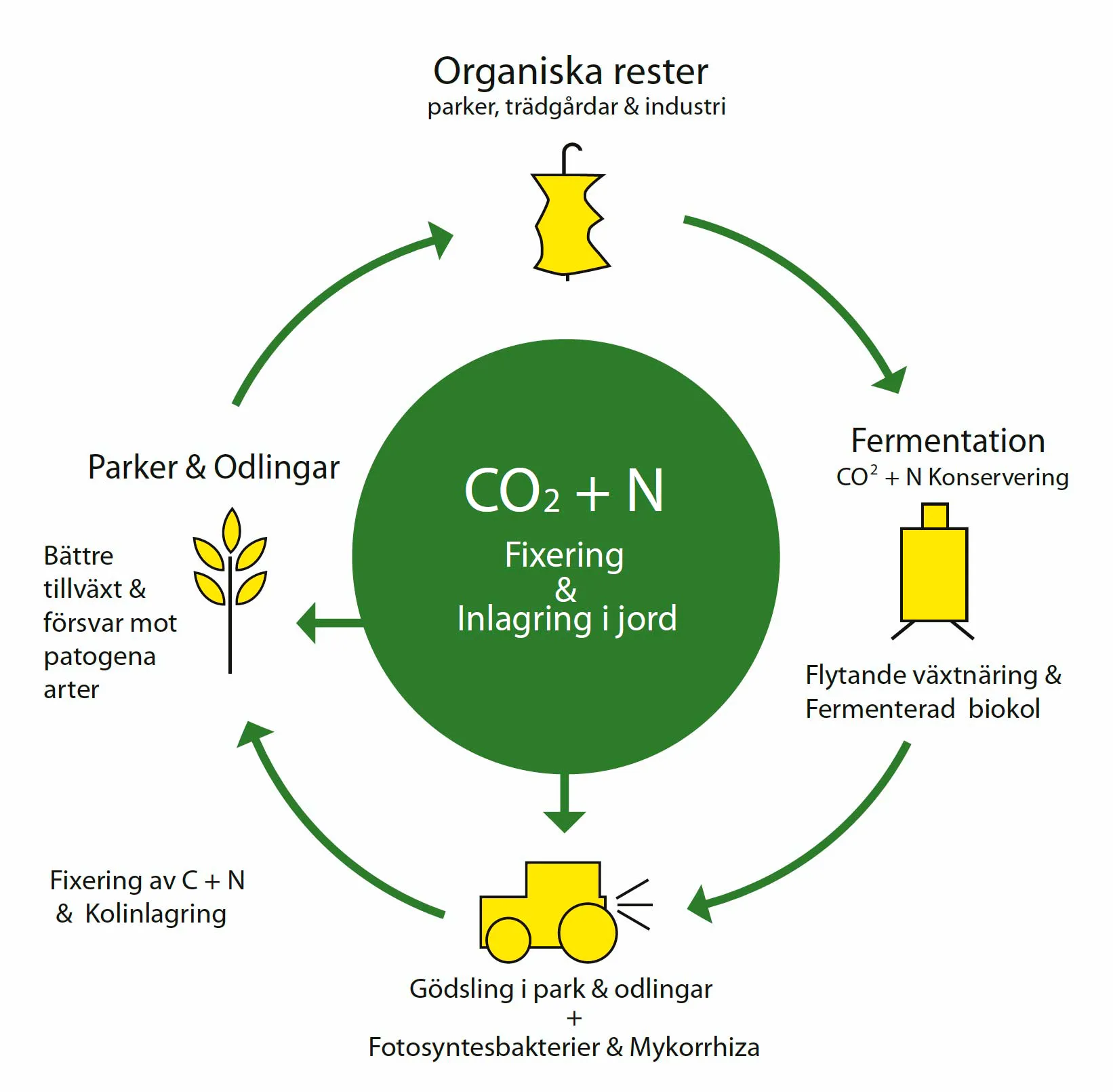
An optimised circular & climate-smart loop
Our cities generate large volumes of organic residues. With microbial consortium technology, these flows can be refined into climate-smart plant nutrition and put into a circular loop that creates negative emissions in parks, farmland and green spaces. The city's green areas go from being sources of emissions to surfaces that capture and store greenhouse gases. A win-win effect is that the cultivation strategy leads to healthier plants and trees that can take up more CO₂ and thereby store more carbon.
Today's problem:
Trees and shrubs in urban environments often lose their resilience and are attacked by pathogens. This is usually caused by road salt, which impairs the plants' ability to take up nutrients and water. Combined with petrochemicals and pollution from traffic, the problem gets worse. If the fertilisation programme is also based on conventional mineral-salt fertiliser, the problem is aggravated further. Scientific reports from recent years show that the use of mineral fertiliser in itself increases problems with pathogens in tree cultivation. Important ecosystem services such as capturing CO₂ through photosynthesis then lose strength, while the cost of replacing diseased trees becomes considerable.
The problem with traditional composting:
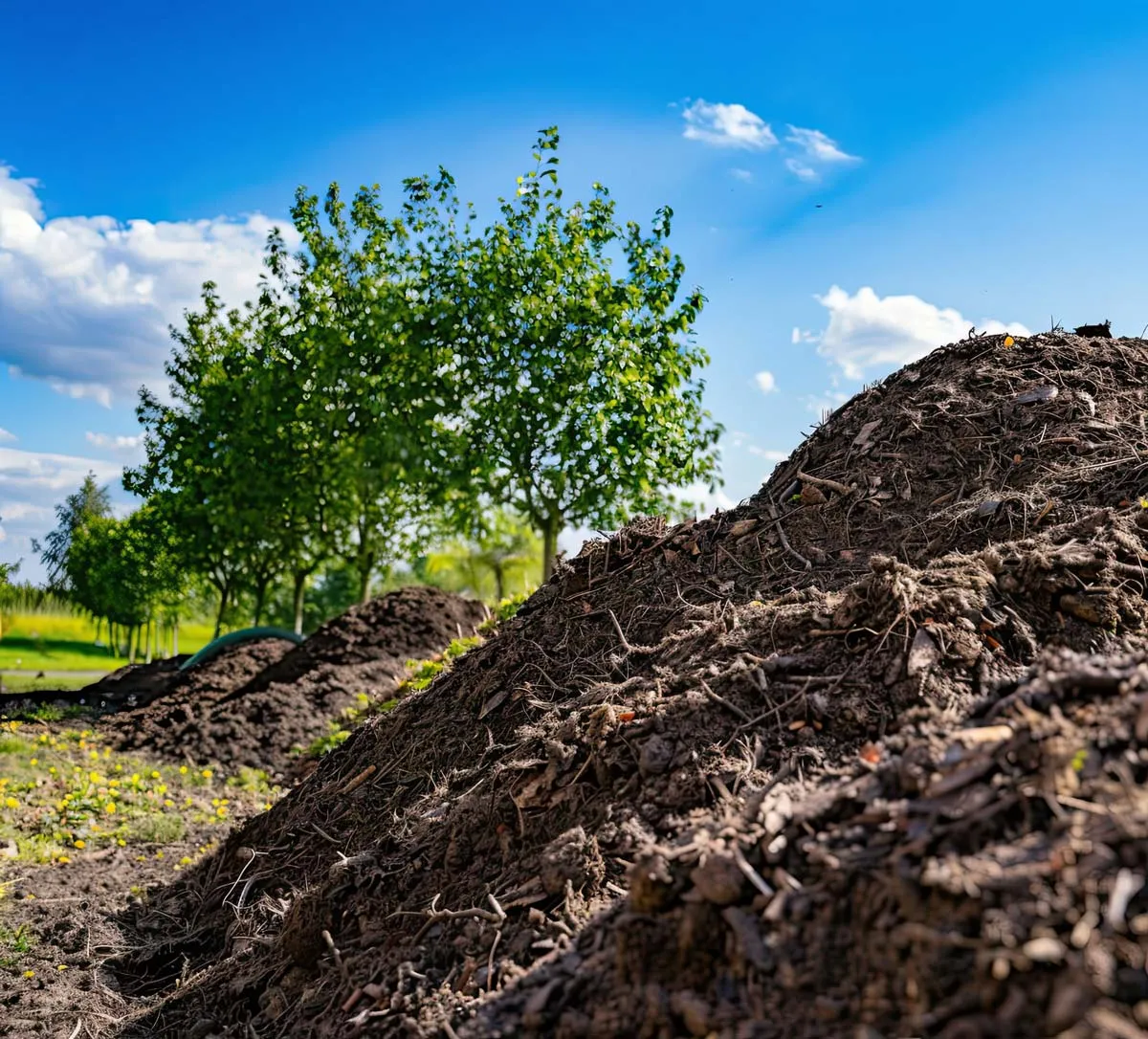
Branches, leaves and other organic residues end up at the cities' recycling facilities, where they are piled up to be composted. This in itself generates large emissions of greenhouse gases in the form of CO₂, methane and nitrous oxide, because the method lets the inner parts of the compost start to rot while the outer parts are broken down aerobically (the compost must be turned every 30 minutes to prevent rotting). Emissions from turning the compost by machine come on top of that.
Traditional composting has a further drawback: the process promotes the growth of pathogenic species because it does not sanitise effectively. This can be addressed with large composting drums running at a higher temperature. The problem of continued large greenhouse gas emissions remains, however, and is neither sustainable nor in line with the Swedish Climate Act.
The solution
Fresh organic residues such as foliage, grass and spent grain from microbreweries are refined through fermentation with a consortium of nitrogen- and CO₂-fixing microbes. The process is a form of fermentation that binds the nitrogen and the energy (CO₂). Since the microbes in the process act as growth-promoting rhizosphere microbes, they help the plants access nutrients and other bioactive substances that strengthen the plant's defence against pathogens. The fermented plant nutrition is combined with mycorrhiza, which optimises the interplay in the root zone and improves water uptake. The hyphae of the mycorrhiza form the glycoprotein glomalin – a substance made of carbon and nitrogen that can be stored in the soil for up to 25 years. See the model below.
The part of the organic residues that is not used to produce liquid plant nutrition, such as branches and coarser material, can be put into the loop through biochar production or alternatively be fermented in compost windrows. Ahead of the scientific sustainability conference Universal Village in 2016, MIT Cambridge presented a report from Wageningen in the Netherlands showing that fermentation (lactic acid fermentation) produces 27 times lower greenhouse gas emissions, because the process binds CO₂ and counteracts the formation of methane and nitrous oxide. The report has been peer-reviewed.
The Carbon Capture concept leads to:
- Negative emissions through carbon and nitrogen storage in the city's green spaces – the city improves its climate budget!
- Photosynthetic bacteria fix CO₂ and nitrogen while counteracting the formation of methane and nitrous oxide.
- Mineral fertilisers and agrochemical pesticides can be phased out – NPK causes large greenhouse gas emissions in production.
- Much healthier trees mean fewer trees need replacing – large cost savings.
- The soil structure of green spaces improves, so they can take up and hold more water – reducing the need for irrigation.
- Mycorrhiza and photosynthetic bacteria protect plants against toxic substances and break down PCBs, benzene and more.
- The city uses local organic residues in an optimised circular and climate-smart loop.