

Our method
Microbe Factory's cultivation strategy strengthens ecosystem services
Over 400 million years, evolution has created an intimate interplay in the soil ecosystem. Through photosynthesis, green plants convert solar energy into liquid, energy-rich carbon compounds — and share them generously in the root zone.
- 400 million years of interplay between plant and microbe.
- 40% of the plant's energy is shared in the rhizosphere.

The microbes release the nutrients
The microbes in turn mineralise organic matter and release the nutrients the plant needs. They also produce a wide range of growth-promoting substances such as root hormones, enzymes, antioxidants, amino acids and vitamins.

The plant directs, the microbiome and mycorrhizal fungi deliver
The plant can attract microbes as needed — if it needs nitrogen, it stimulates nitrogen-fixing microbes. Mycorrhizal fungi act as efficient transport routes, sending energy out to the soil microbes while delivering nutrients from the microbes to the plant. They also play a crucial role in the plant's water balance.
Microbe Factory's cultivation strategy is built on seeing the whole system — from the fixation of CO₂ and the transport of energy-rich carbon compounds to the ecosystem services of the microbiome, such as mineralisation, carbon sequestration and the processes that build soil structure.
The plant and the microbiome – an intimate partnership
The microbiome lives on the plant's stems and leaves, around the roots and inside the plant as so-called endophytes. The rhizosphere, the zone around the roots, is a “hotspot” where the plant actively releases energy-rich carbon compounds to attract and stimulate microbial growth. The microbiome responds by producing substances and signalling compounds that:
- Optimise growth, with root hormones, organic acids that release nutrients, enzymes etc.
- Protect the plant, by switching on genes in its immune system and counteracting salt and water stress.
- Fix atmospheric nitrogen and make the uptake of micronutrients more efficient with siderophores.
- Produce substances that act like a biological glue – substances that build soil structure.
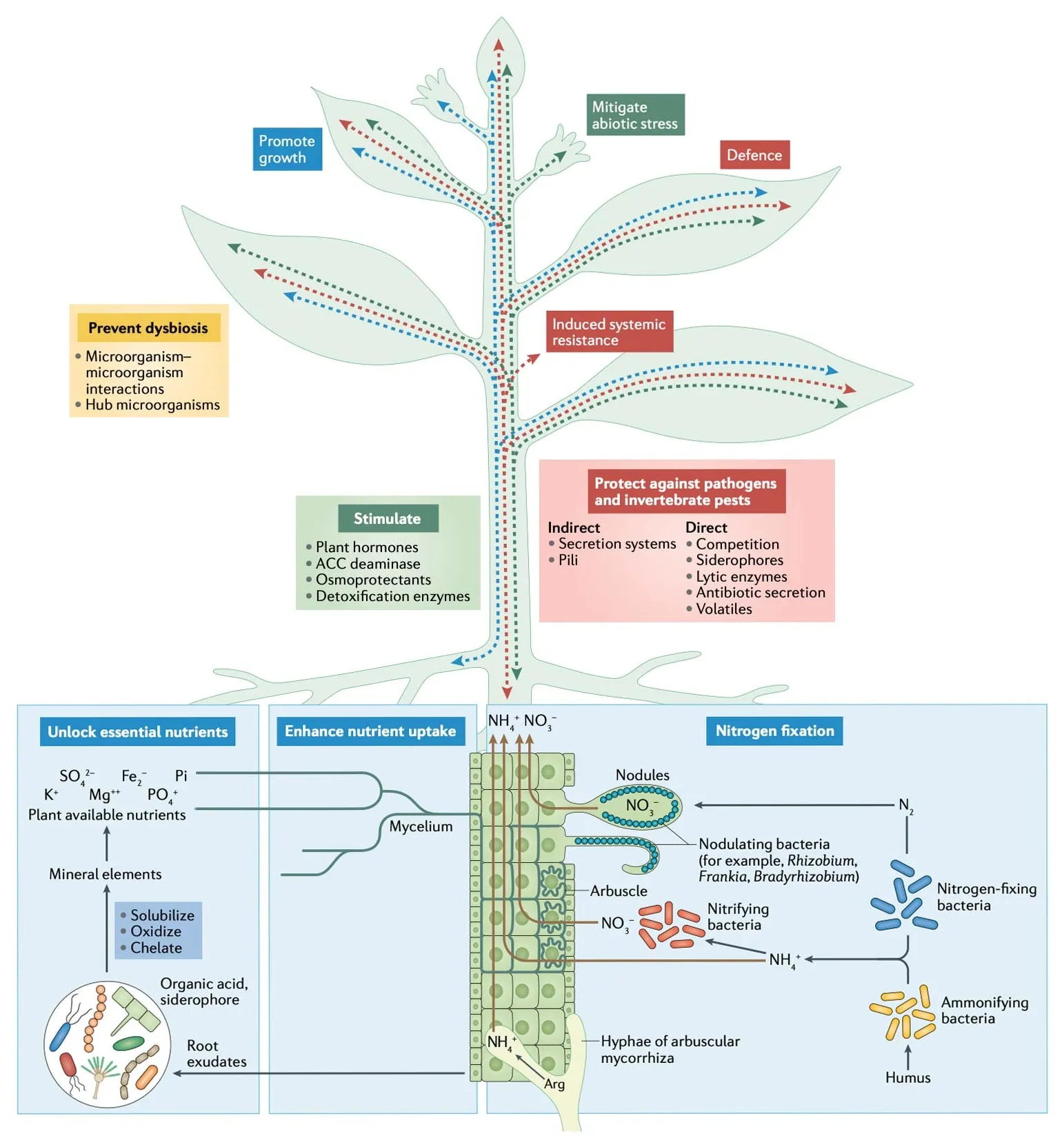
© Nature Reviews Microbiology, vol. 18, November 2020, p. 607