

Our projects and concepts
Carbon Capture Farm
Producing plant nutrition at farm level
By copying nature's own processes, the Carbon Capture Farm concept can solve some of agriculture's biggest problems: high mineral fertiliser prices, greenhouse gas emissions, water management and growing pressure from weeds, diseases and insect pests.The central question the concept asks is: could the most profitable strategy be for farms to produce their own plant nutrition?

From residual streams to living plant nutrition
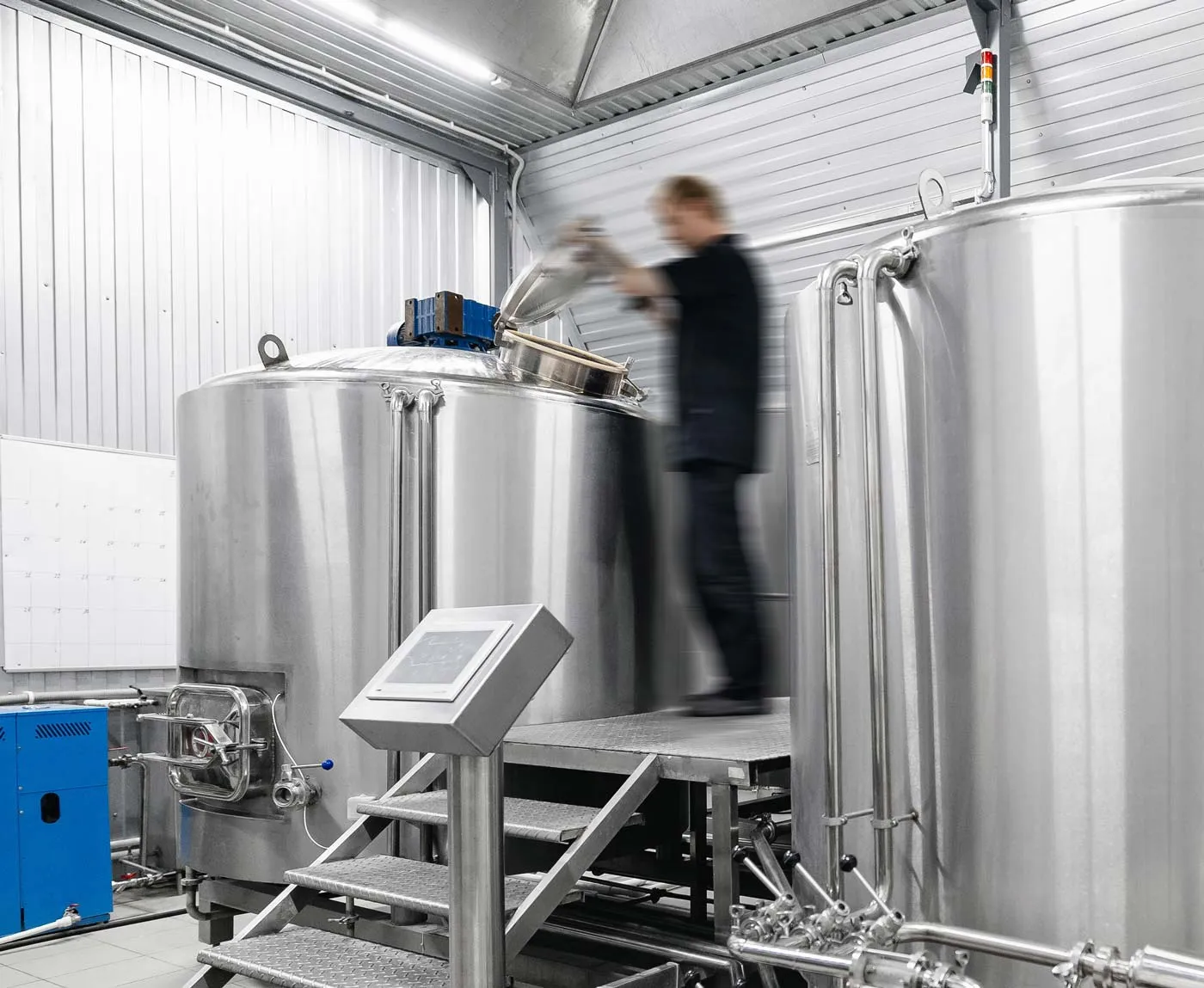
Acidifying slurry is a proven method for reducing nitrogen and greenhouse gas losses. CCFarm builds on acidifying organic residual streams in closed fermentation vessels, but goes a few steps further and produces a fully sanitised plant nutrient containing growth-promoting PGPR microbes, which can be applied with a field sprayer and a solid manure spreader.
The microbial preparations used in the process are based on complex groups of lactic acid bacteria and clones of effective microbes that fix and biologically bind nitrogen and other nutrients. This preserves the energy (the carbon), the nitrogen and other nutrients, so that they can be returned to the soil. Once in the soil, the PGPR microbes release nutrients and fix nitrogen, and strengthen the crop's growth and immune defence.
More fertile soil year after year
The carbon/nitrogen ratio of the plant nutrition produced with the CCFarm technique is balanced, which leads to carbon and nitrogen being stored in the soil. More carbon gives a better soil structure, which in turn means the soil can hold more water, nutrients and air – a decisive advantage in a changing climate with more extreme weather. The technique makes it possible to build up the soil's fertility year after year.
See the diagram below, which shows the Carbon Capture Farm principle.

The CCFarm process in brief:
- Collection of organic residual streams such as slurry, cleanings or cover crops.
- Fermentation in closed vessels, where the energy and nutrients are preserved with very low greenhouse gas emissions.
- The solid fraction from the process is spread with a manure spreader and the liquid fraction with a field sprayer.
- Organic residual streams from farming and the food industry are returned to the cycle.
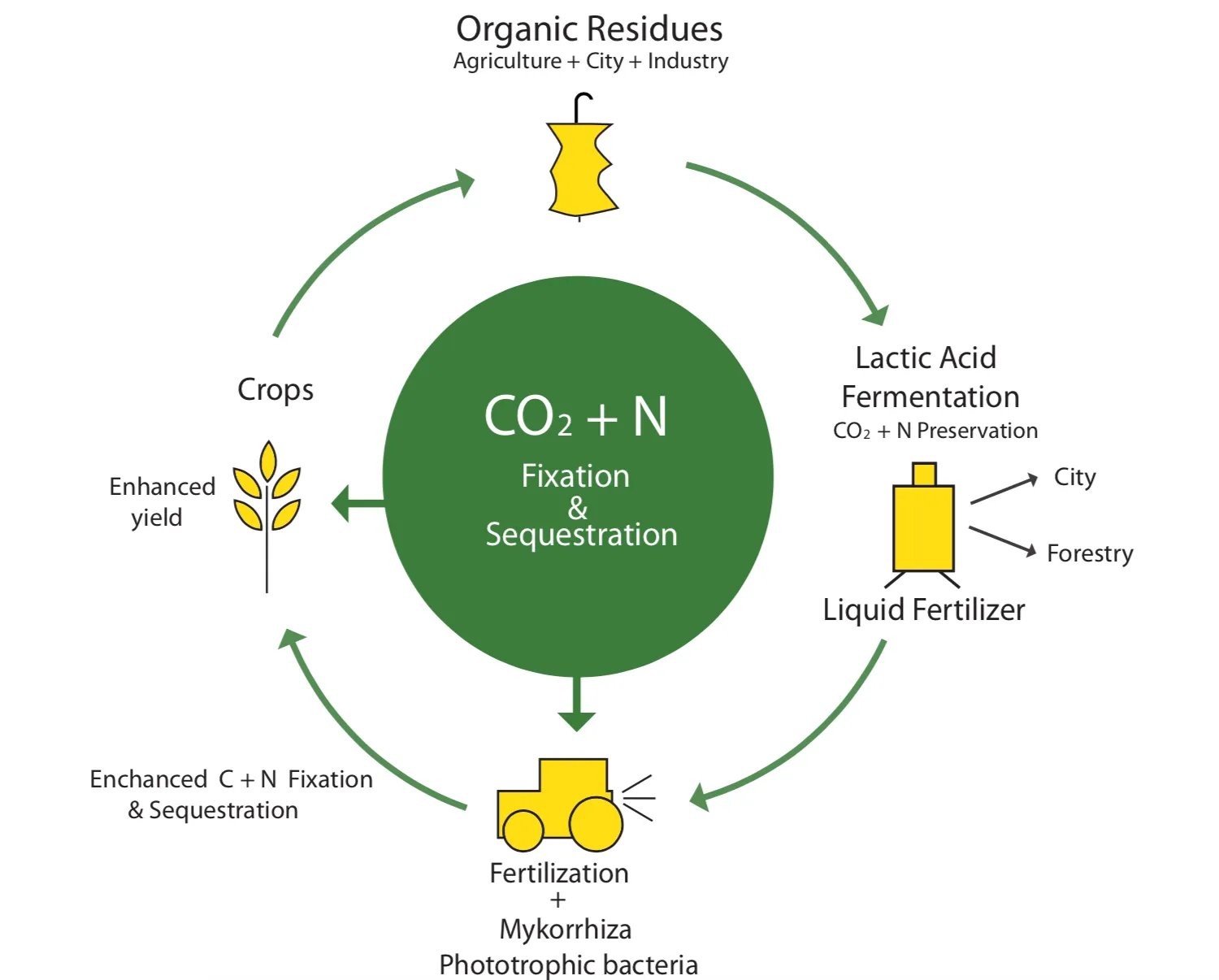
Storing carbon and nitrogen in the soil is a win-win strategy for the farmer and the climate
The problem
In 2015 the Grantham Centre for Sustainable Futures published a scientific report showing that in 40 years we have lost a third of the planet's farmland. A decisive factor is that synthetic fertilisers and agrochemicals deplete the soil of microbial life, biomass and humus – CO₂ and nitrogen escape as greenhouse gases. The NPK method leaves poor soils with a reduced ability to hold water, nutrients and air. The Grantham report shows that the agrochemical strategy is a failure – it does not work with the ecosystem in the soil, and important ecosystem services are lost. A central ecosystem service is the interaction between soil microbes and the plant. Soil microbes produce thousands of bioactive substances such as vitamins, enzymes, antioxidants and amino acids, which give crops a high nutrient content. Agrochemical farming produces volume without regard to whether the food we eat promotes health.
The solution
With Carbon Capture Farm we put organic residues back into the cycle and close the carbon loop. Energy, nutrients and carbon are returned to the soil and build up its microbial life. The technique strengthens important ecosystem services, such as the soil's ability to hold water and nutrients and to supply the crop with important bioactive, health-promoting substances. The soil can be seen as the planet's largest possible battery for greenhouse gases, and when we charge it with more living biomass, it stores both carbon and nitrogen. The strategy creates negative emissions and has the power to build sustainable farming systems and restore soils we have lost to the agrochemical method. Carbon Capture Farm produces crops rich in nutrients and essential trace elements, while the method gives good yields.